The person who wrote the change cannot approve it
Separation of duties on a bill of process, enforced by the software rather than by a procedure on the wall.
In brief
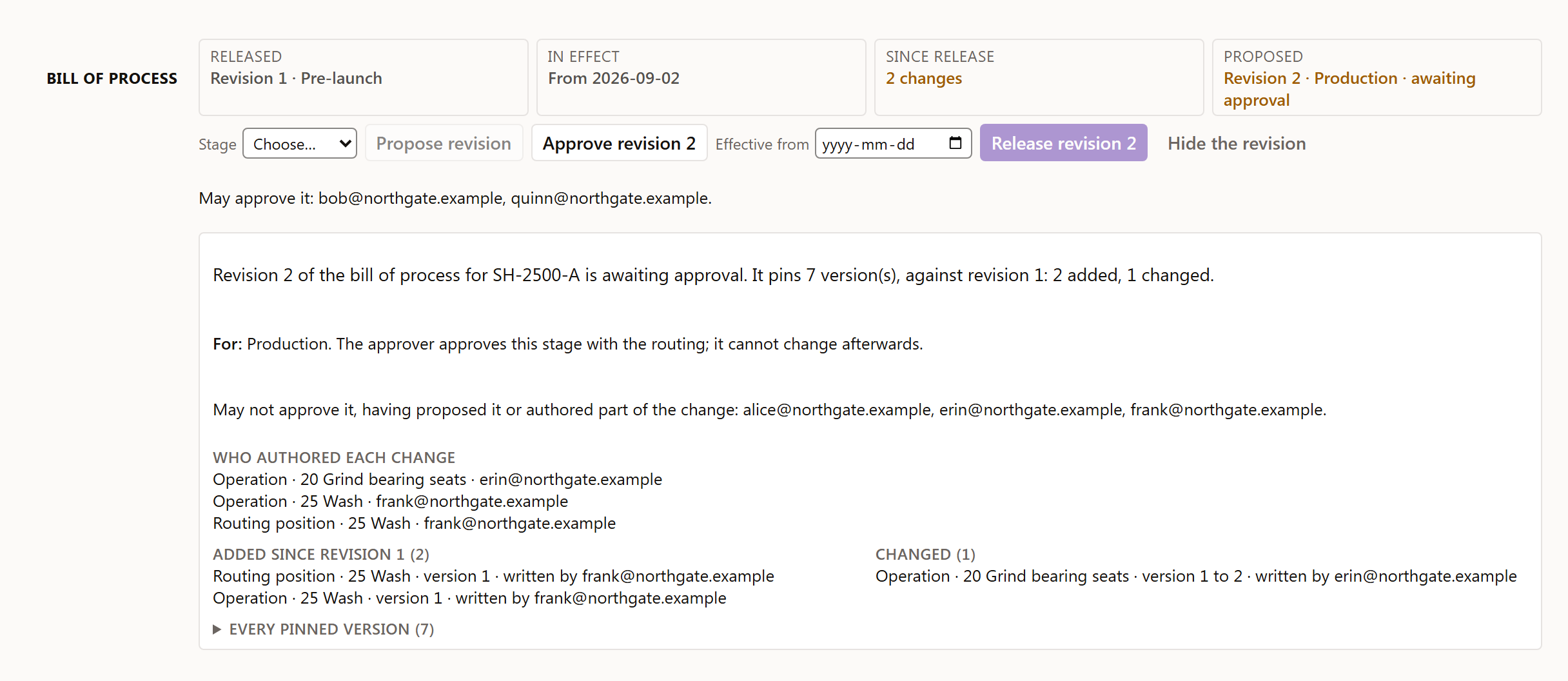
- Revision 2 of a bill of process waits for approval for production.
- Everyone who proposed it or authored part of it is listed as unable to approve it.
- Released revisions are never edited; a change is always a new revision.
A change waiting for approval
A bill of process was released for pre-launch as revision 1. Since then, two operations were added and one was changed, and revision 2 was proposed for production. MIYOQA shows exactly what changed, who wrote each change, and who may approve it.
The rule, enforced at the point of approval
Most quality systems state separation of duties in a procedure and trust people to follow it. In MIYOQA, the approval itself checks it. An engineer who proposed the revision, or wrote any part of the change since the last release, cannot approve it. The screen says so in plain words, and names who can.
Every operation, accounted for
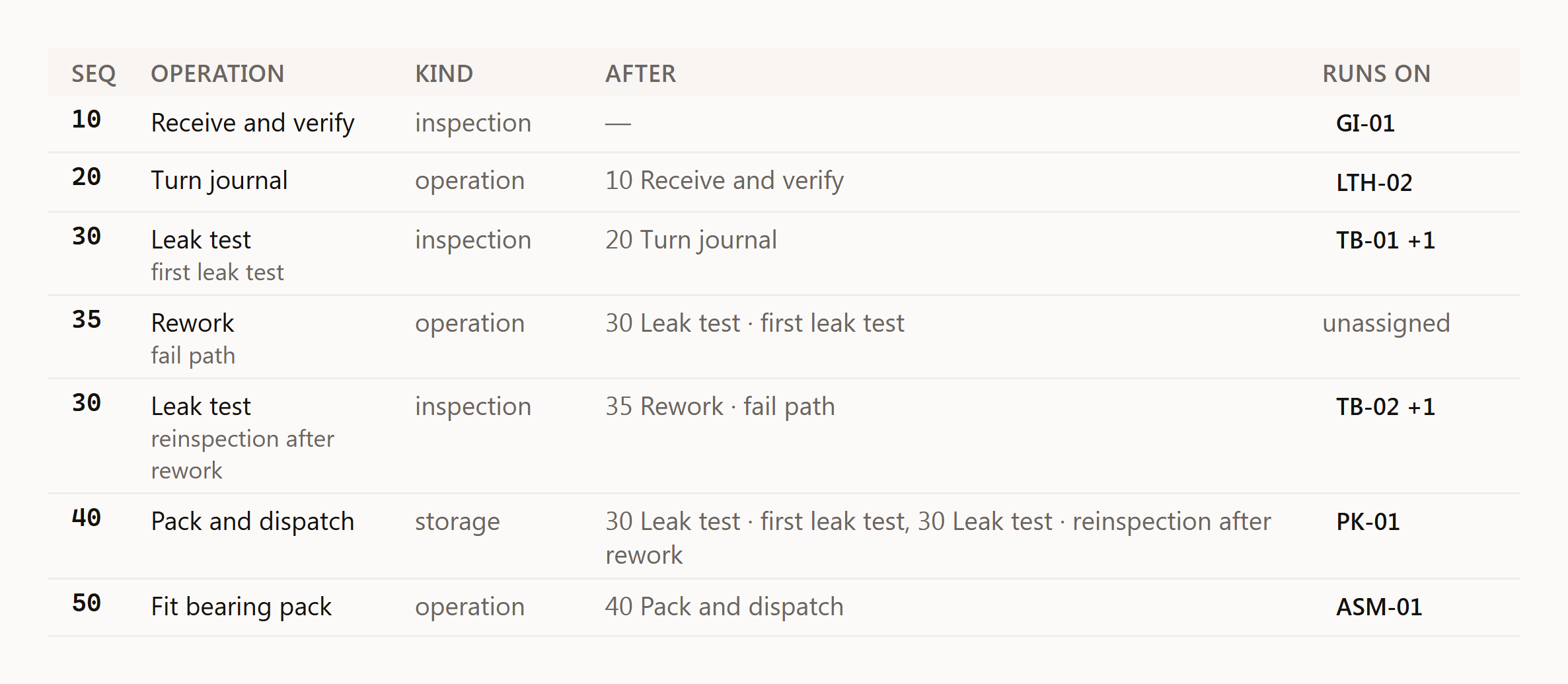
Each operation in the bill of process keeps its kind, the step it follows and the station it runs on, including a rework path and the reinspection after it.
Why it matters
When a change reaches production, an auditor will ask who approved it and whether they were independent of it. With MIYOQA, the answer is in the record, and the software made sure it was true before the release.
These screens use a second demonstration part. The people shown are fictional.
Demonstration case. The records come from Project M, a synthetic programme that ships with MIYOQA for training and evaluation. No customer data is shown.
More case studies
From leak rejects to a root cause, in eleven steps
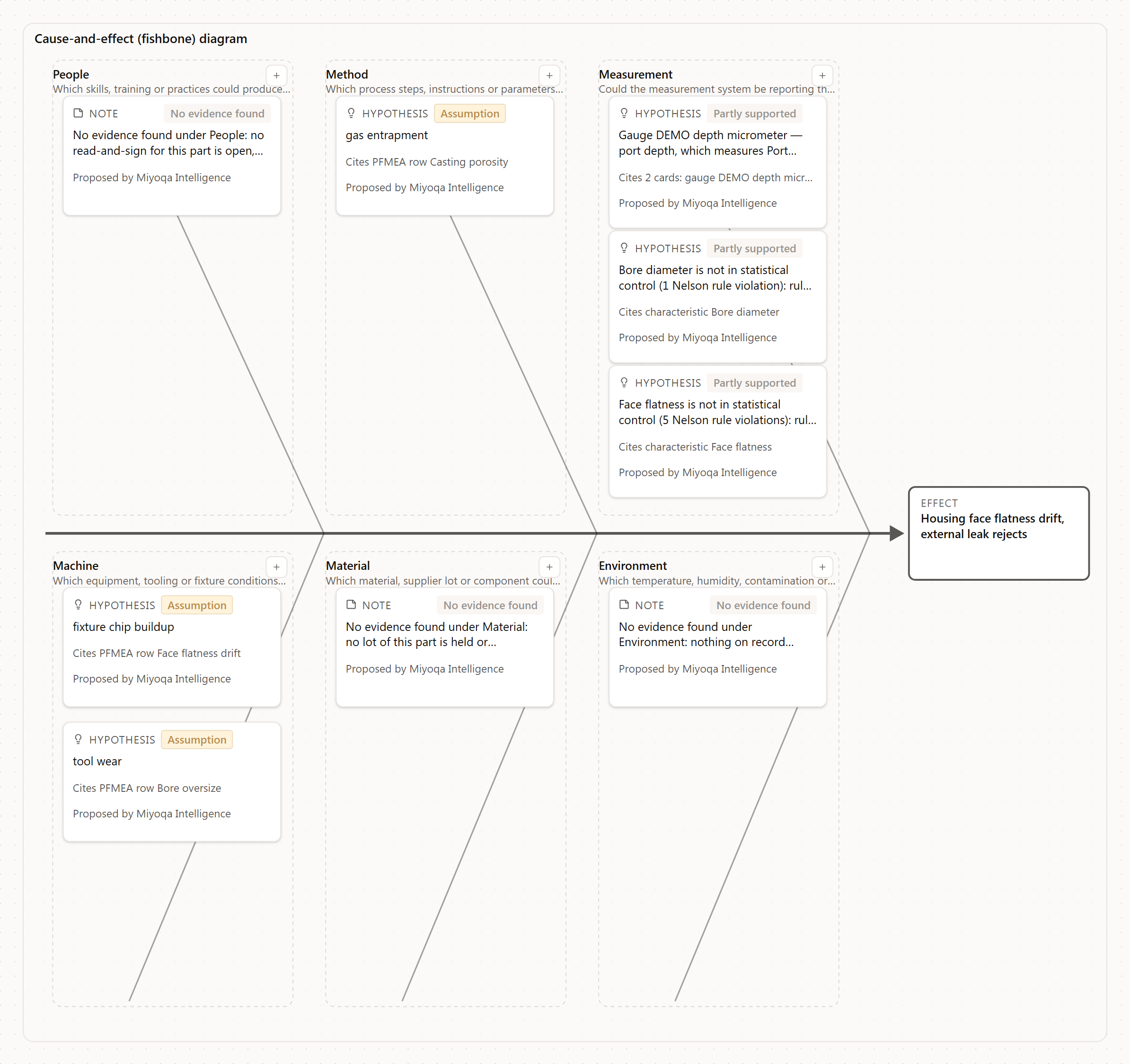
A pump housing drifted out of flat and leak rejects rose. MIYOQA worked the problem from the records, and left every decision to the engineer.
Read the case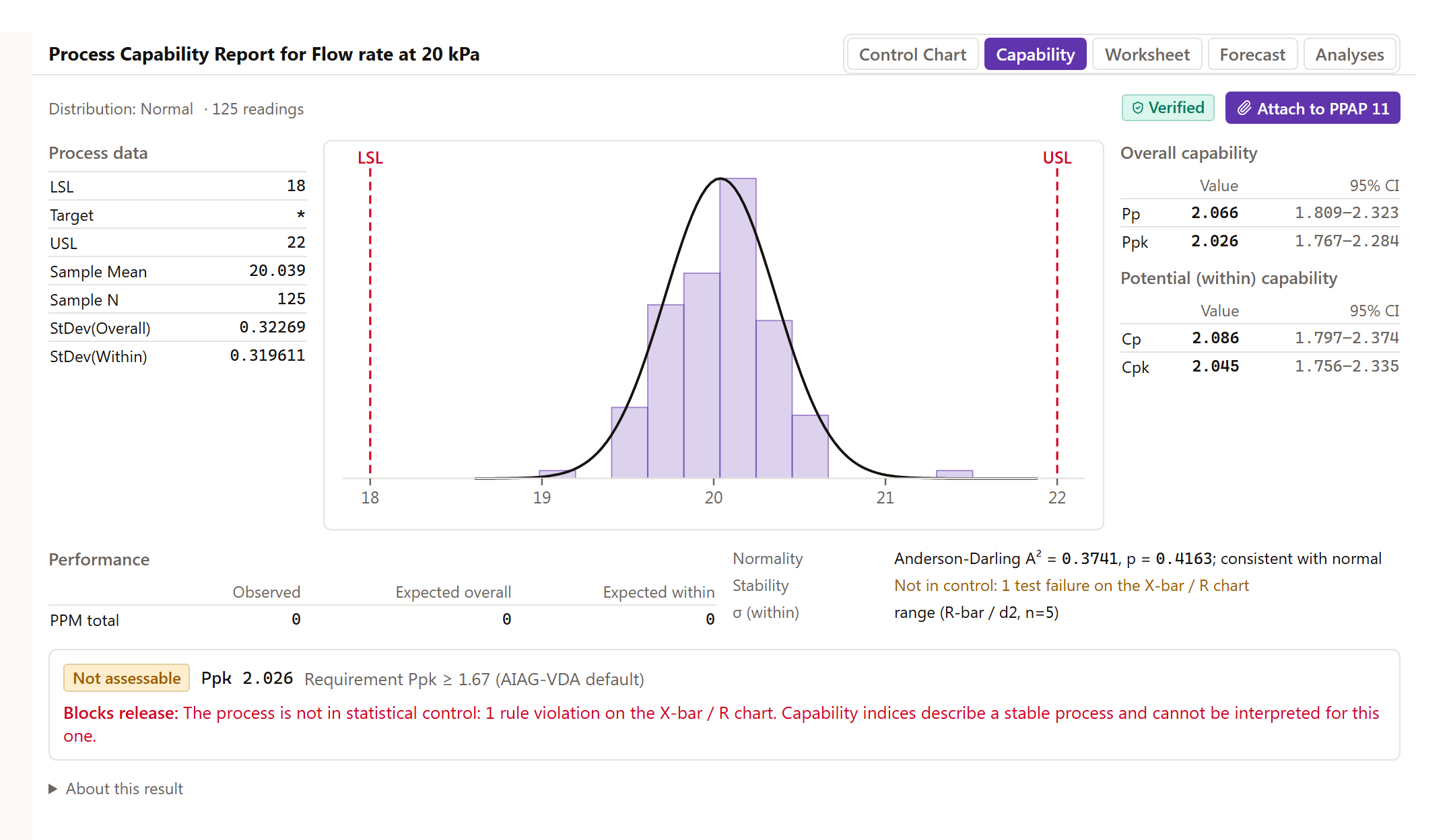
When a Ppk of 2.03 is not good enough
The index was well above the requirement, and MIYOQA still blocked the release. A capability number is only as good as the process behind it.
Read the case