MIYOQA / Platform
One model for product, process and quality.
Kizuna gives each record one identity. More than 30 work surfaces build on it, from the DFMEA to the part submission warrant.
kizuna · a lasting bond
Kizuna: one record, one identity.
Each part, characteristic, operation, workstation, lot, inspection and nonconformance is declared once in the data model, with one identity.
- One declared data model for product, process and quality records.
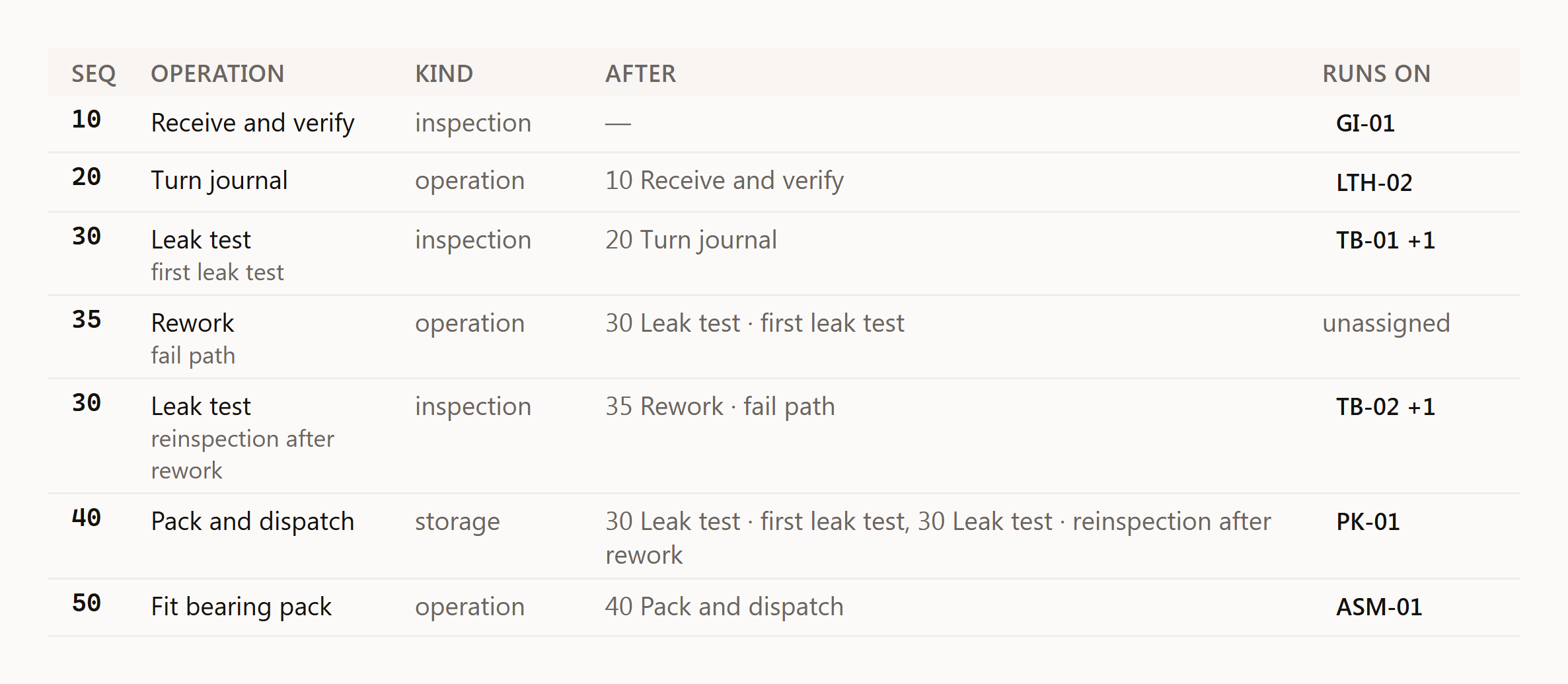
- Versioned bills of process, manufacturing BOMs and plant layouts.
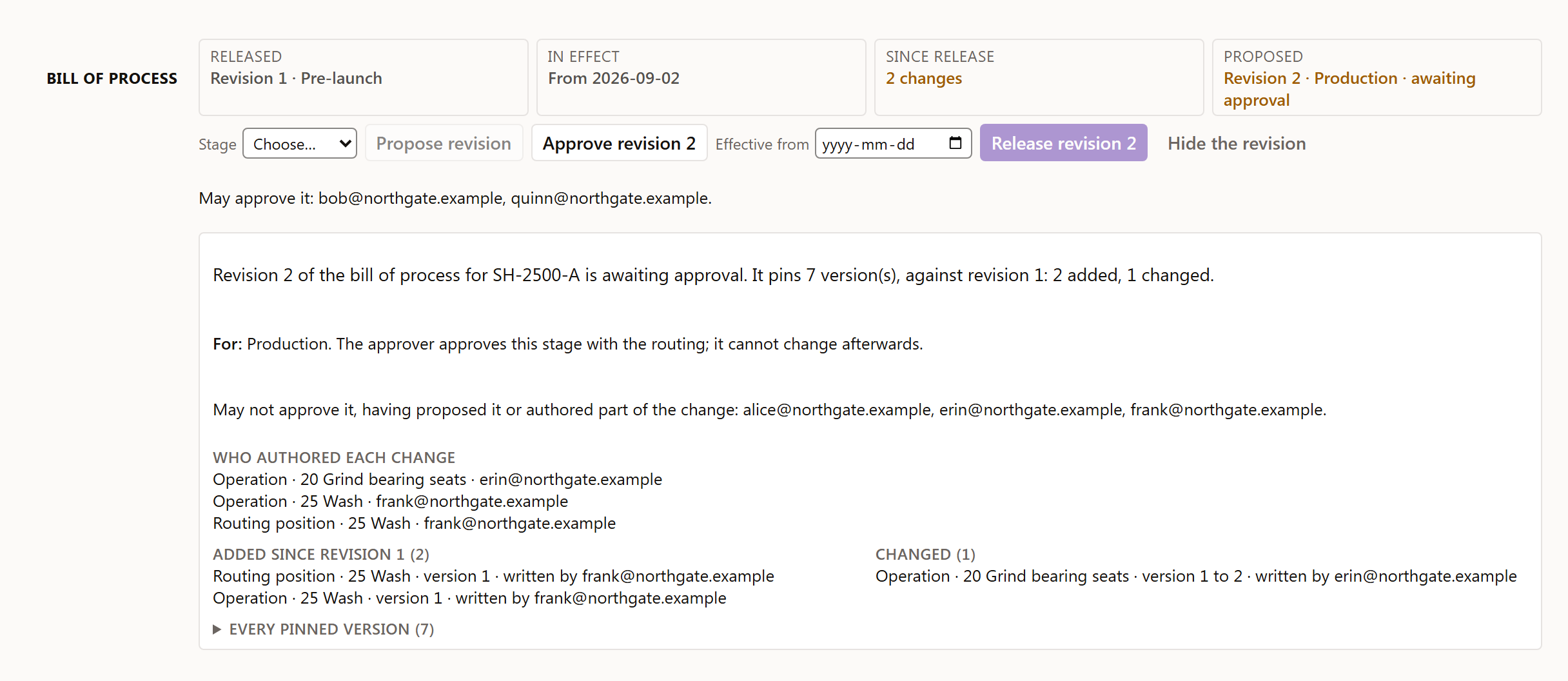
- Released versions are never edited; a change is a new version. A bill of process is released only after approval by an engineer who neither authored nor proposed the change.
Kizuna in the product
Released records, kept as they were approved.
Platform
Each quality discipline on one model.
Product
- Product Structure
- Characteristic Spine
- Design Analysis
- DFMEA Worksheet
Process
- Process Designer
- Process Flow Studio
- PFMEA
- Control Plan
- Sim Studio
Quality
- Engineering Board
- NCR Queue
- 8D Problem Solving
- Chart Studio
- Calibration and Events
- Quality System
Programme
- Lifecycle Home
- Program Schematic
- Program Portfolio
- Compliance Grids
- Document Studio
- Executive Dashboard
Operations
- Shop Floor
- Station terminal
- Production Monitoring
- Material
- Supplier and customer portals
Engineering Board
Investigations built from evidence, not memory.
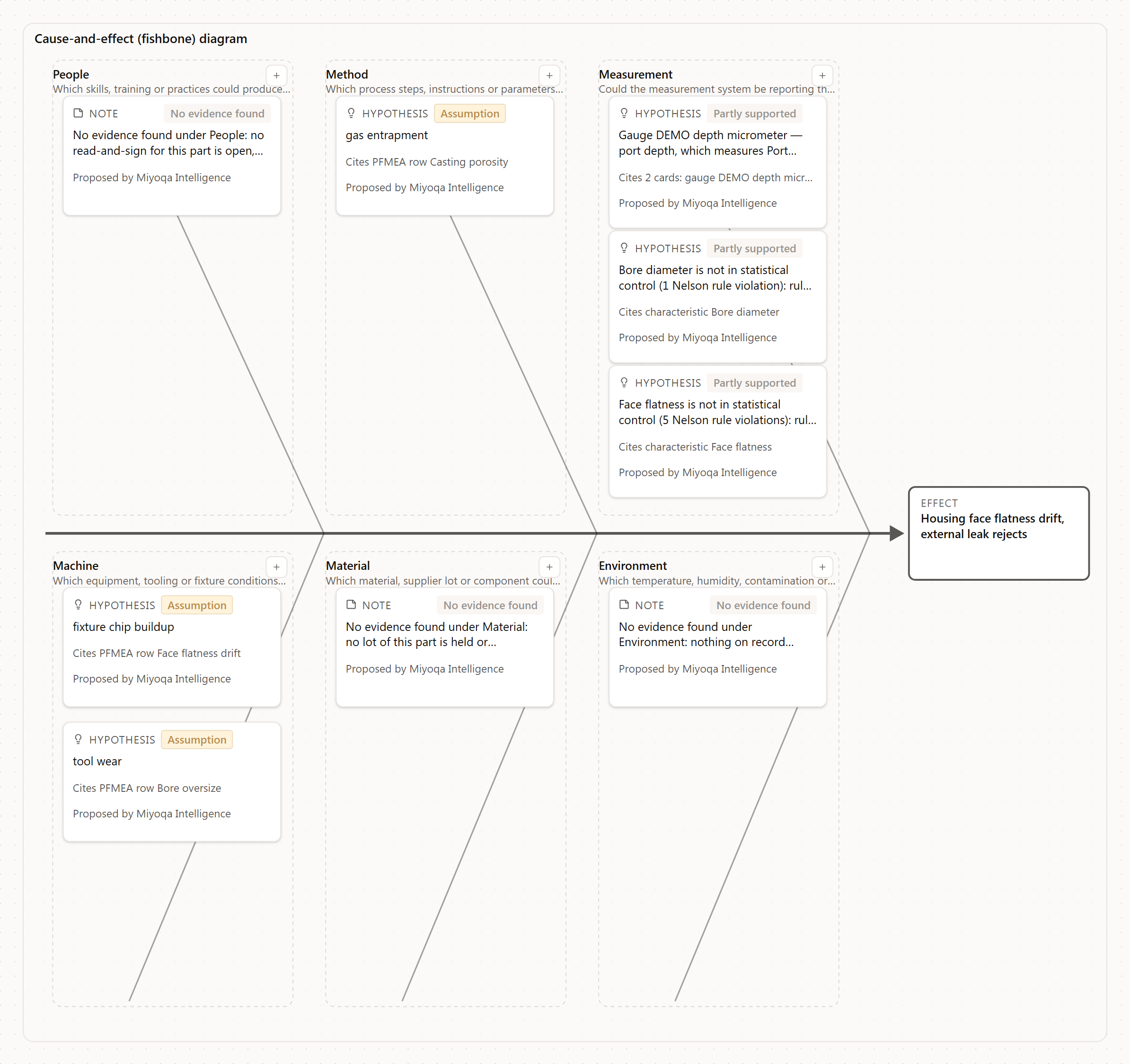
The Engineering Board draws quality investigations as structured diagrams. Each card on the board refers to a record of the part; it is not a copy.
- A card can follow its record or hold a fixed revision. When the record is corrected, the board shows what is now out of date.
- Each cause is marked by how far the records support it: partly supported, assumption, or no evidence found. A category with nothing on record says so.
- Each person sees only the records their role permits. A board exports as a report or an editable presentation.
Engineering Board
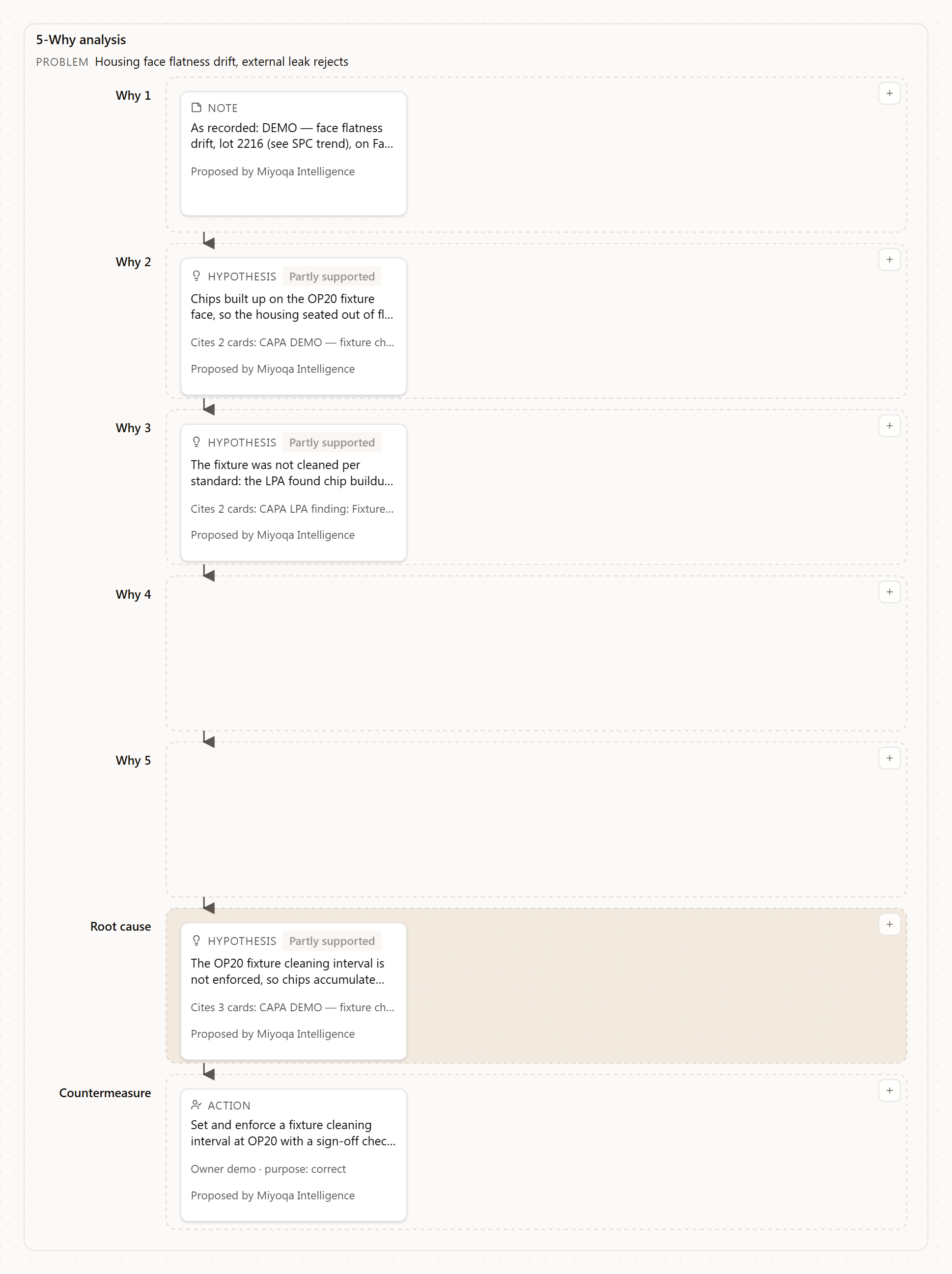
The same problem, developed as a 5-Why.
MIYOQA Intelligence, running on Claude Sonnet 5.5, drafted the whys, the root cause and the countermeasure from the part's records: one task, 11 steps, 13 cents. It stopped at three whys because the records supported no more. An engineer read every cited record and accepted the four proposals they support.
Submission
From records to a submission, without retyping.
MIYOQA reads the documents you already have, checks them against the record, and assembles the submission your customer expects.
Your files, checked before they count
FMEA and control plan workbooks, BOMs, MSA and dimensional results, and Q-DAS files. Each upload is shown as parsed and verified, failed, or stored without parsing. Drawing recognition proposes characteristics; a person confirms them.
All 18 elements, with the objections first
The compliance grid shows each PPAP element and the questions a supplier quality engineer would raise, before the customer raises them.
Customer requirements, versioned
Customer-specific requirement profiles are kept as approved revisions. The PPAP package is exported in the format the customer portal expects.
Review your own part on MIYOQA.
Bring one part's BOM, PFMEA and control plan. We will show what is connected and what is missing.