When a Ppk of 2.03 is not good enough
The index was well above the requirement, and MIYOQA still blocked the release. A capability number is only as good as the process behind it.
In brief
- Ppk 2.03 against a requirement of 1.67, with a 95% confidence interval on every index.
- The process failed a stability test, so MIYOQA marked the study Not assessable and blocked release.
- The gauge study came first: 8.49% gauge R&R, so the readings could be trusted.
A number that looks like a pass
The flow rate of the electric coolant pump, measured at 20 kPa against limits of 18 to 22 litres per minute, gave 125 readings and a Ppk of 2.03. The customer requirement was 1.67. On most spreadsheets, that is the end of the conversation.
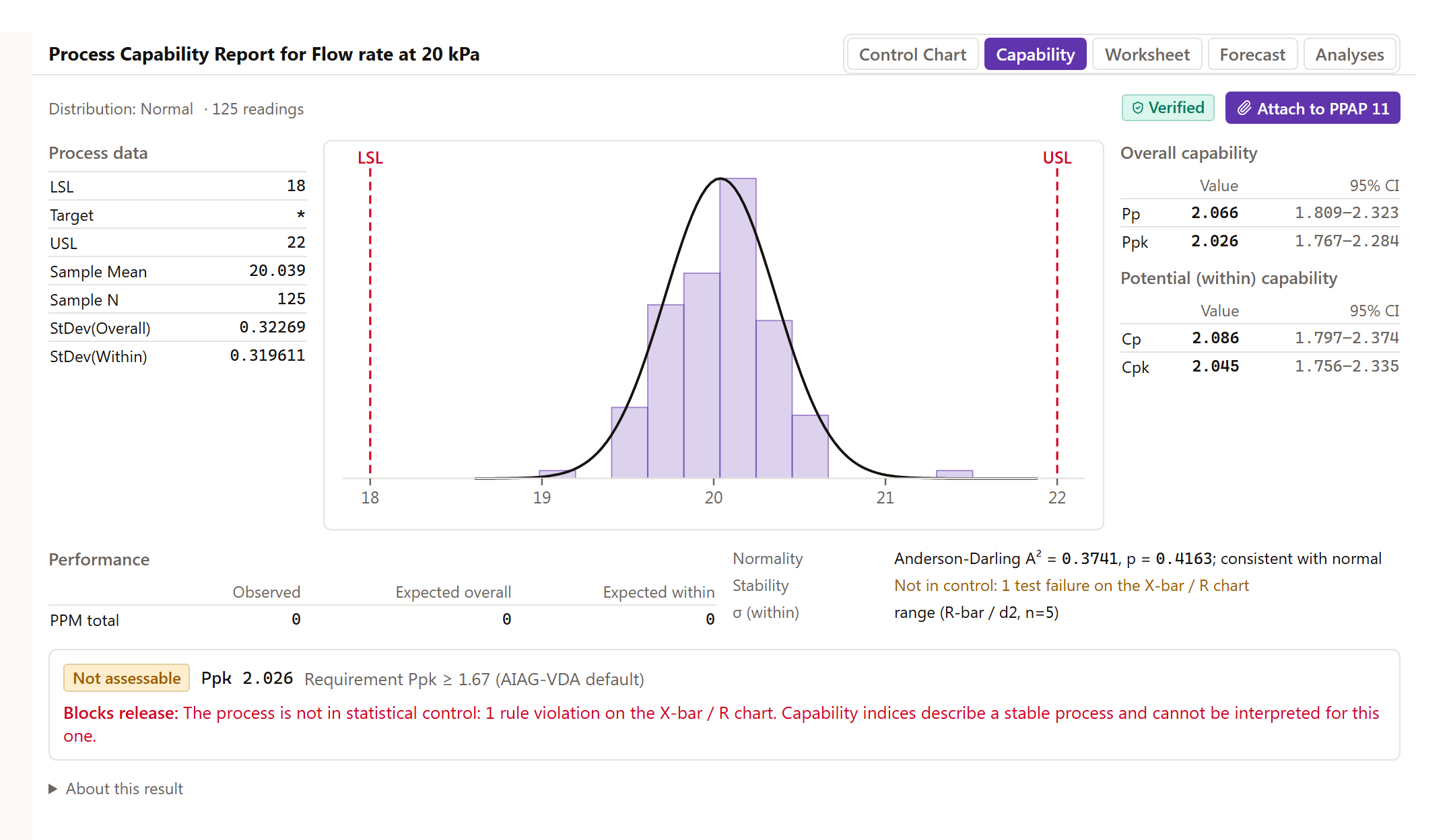
MIYOQA's capability engine checks stability before it reports capability. The process failed a stability test on its X-bar and R chart, so the engine marked the result Not assessable and blocked release. A capability index describes a stable process; for an unstable one it describes nothing reliable.
What instability looks like
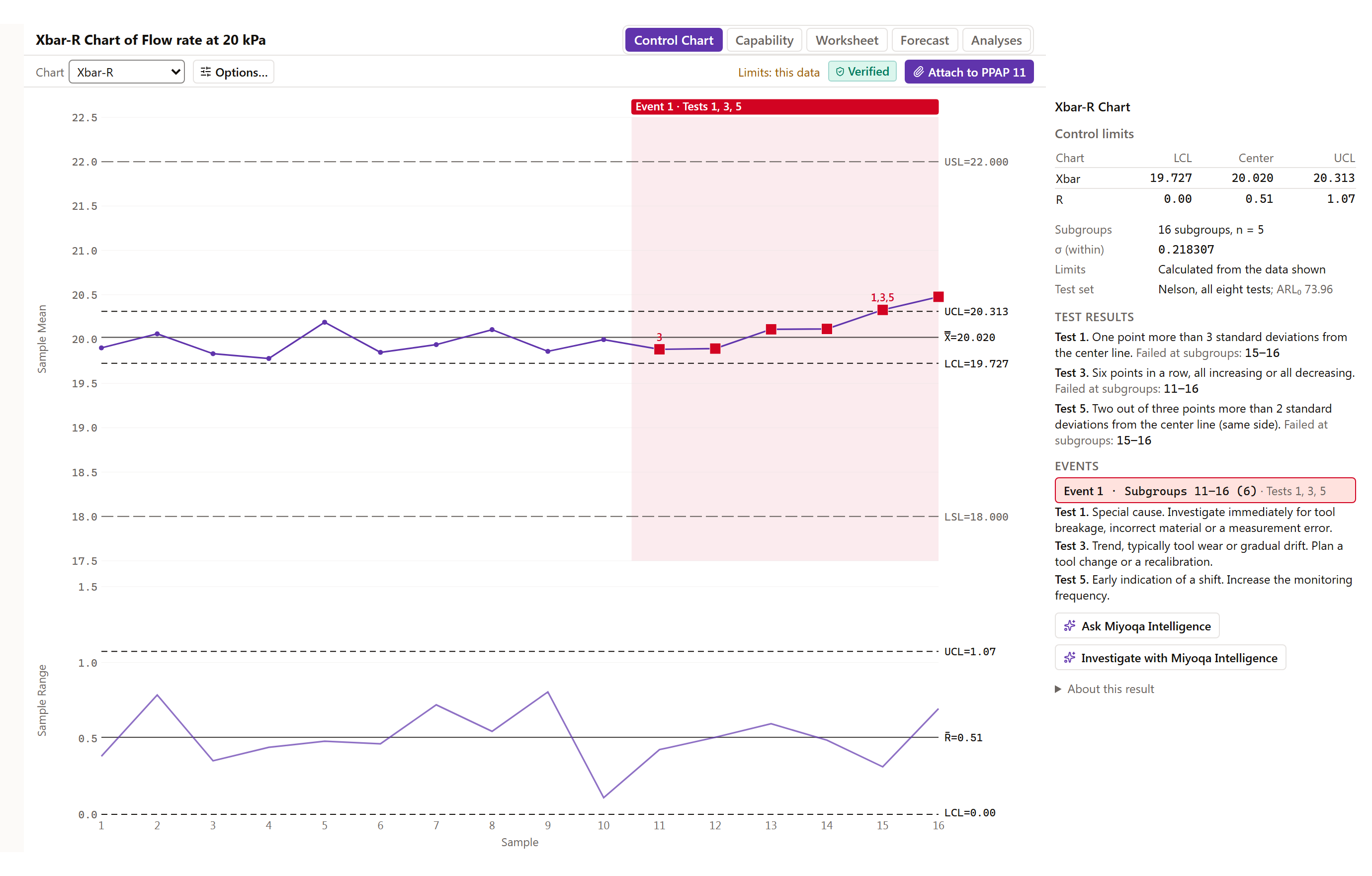
A control chart of the ongoing flow readings shows the kind of signal that stops a study. Over subgroups 11 to 16, three rules failed: a point beyond three sigma, six points in a row trending upward, and two of three points beyond two sigma.
Measure the gauge before you judge the part
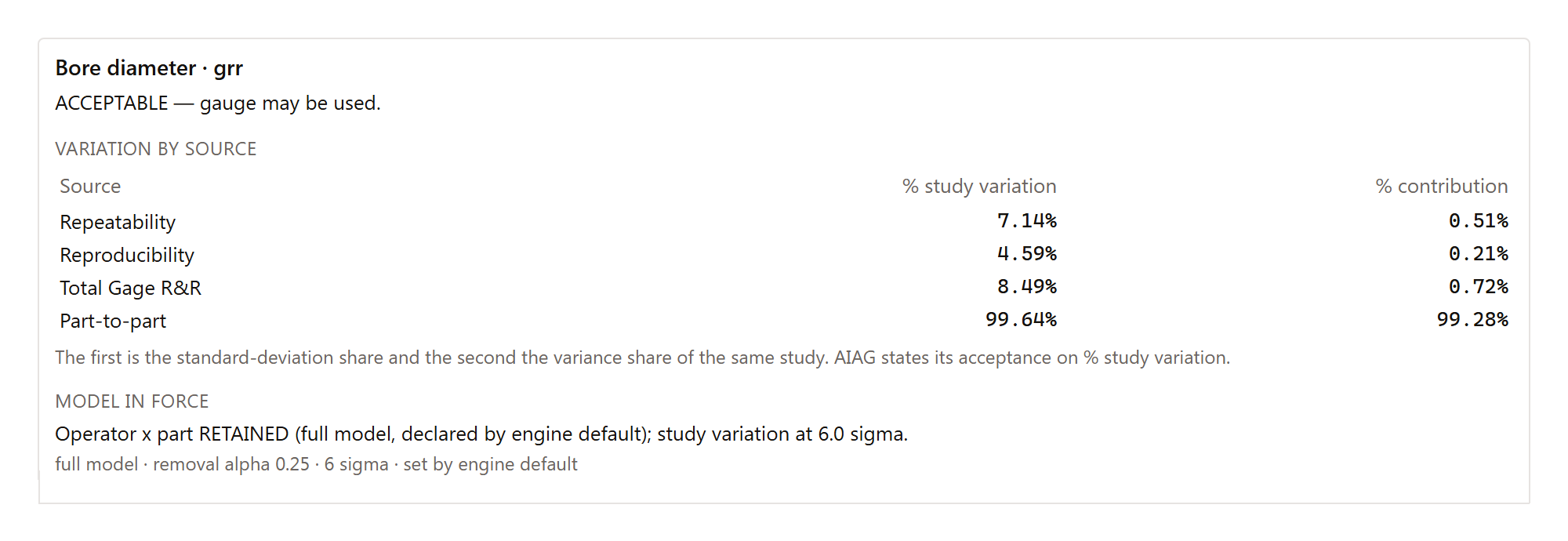
None of this means anything if the measurement system cannot be trusted. The gauge study for the housing bore came back at 8.49% of study variation, which is acceptable, with both the standard-deviation and variance shares shown and the analysis model stated.
Why it matters
A capability figure on a PPAP is a promise to the customer. MIYOQA keeps that promise honest: it calculates every figure with a named engine, shows its uncertainty, and refuses to pass a number that the process behind it does not support.
Demonstration case. The records come from Project M, a synthetic programme that ships with MIYOQA for training and evaluation. No customer data is shown.
More case studies
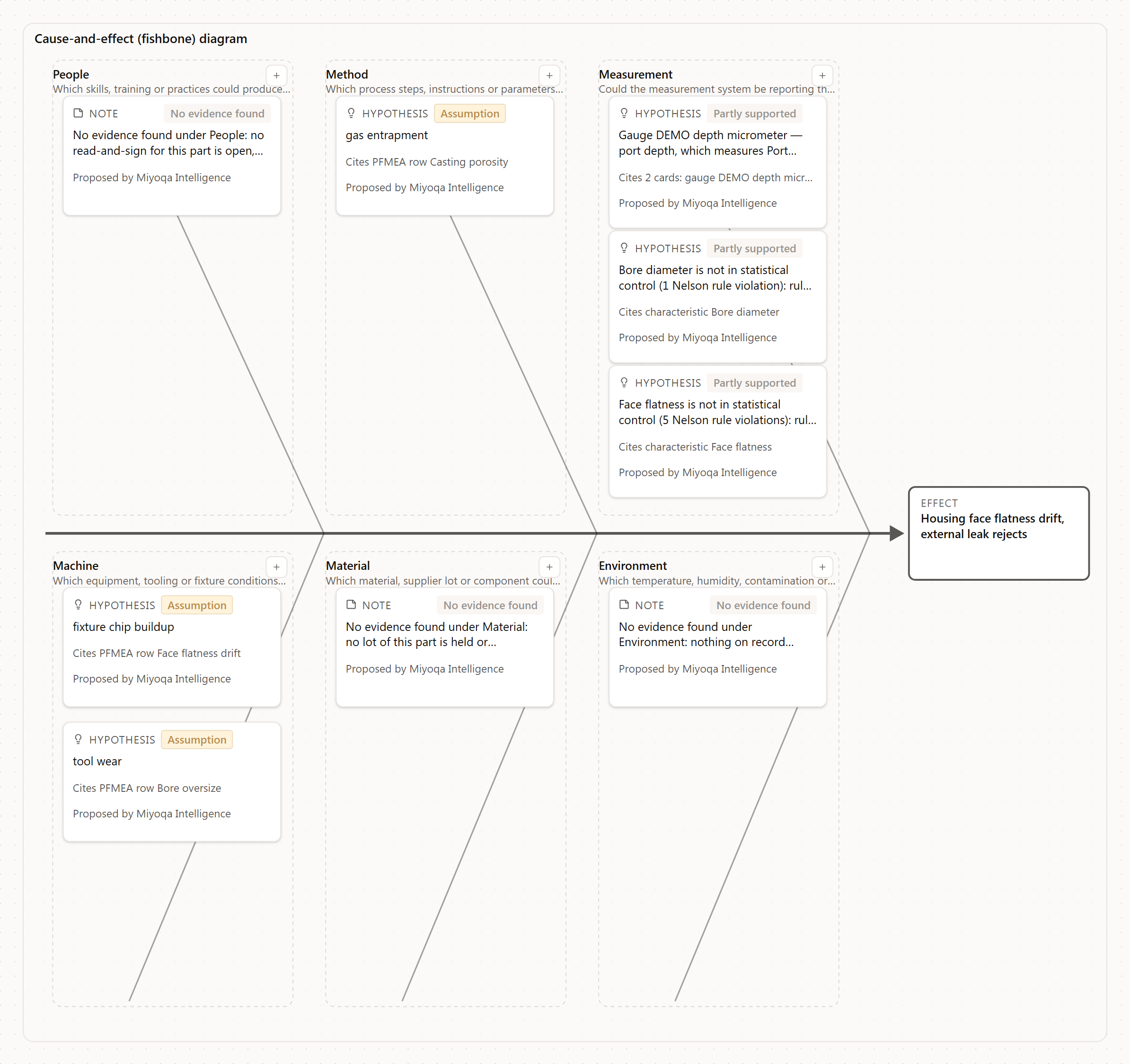
From leak rejects to a root cause, in eleven steps
A pump housing drifted out of flat and leak rejects rose. MIYOQA worked the problem from the records, and left every decision to the engineer.
Read the case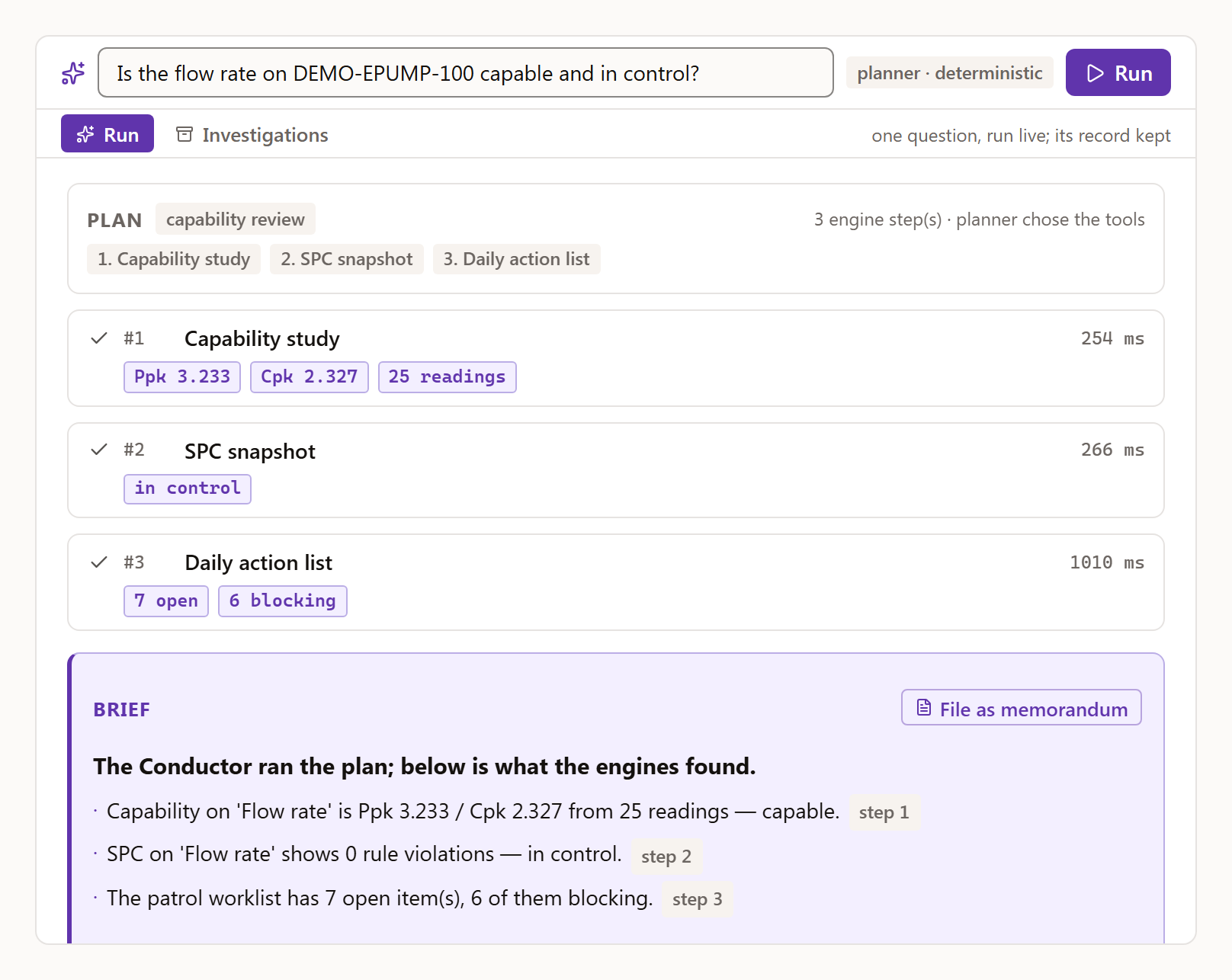
Ask the plant a question, and check every line of the answer
One question became a plan of three engine steps and a brief in which every sentence points to its source.
Read the case