Which station limits the line? A capacity check you can verify
Five stations, one bottleneck, and a throughput figure checked a second way before anyone relies on it.
In brief
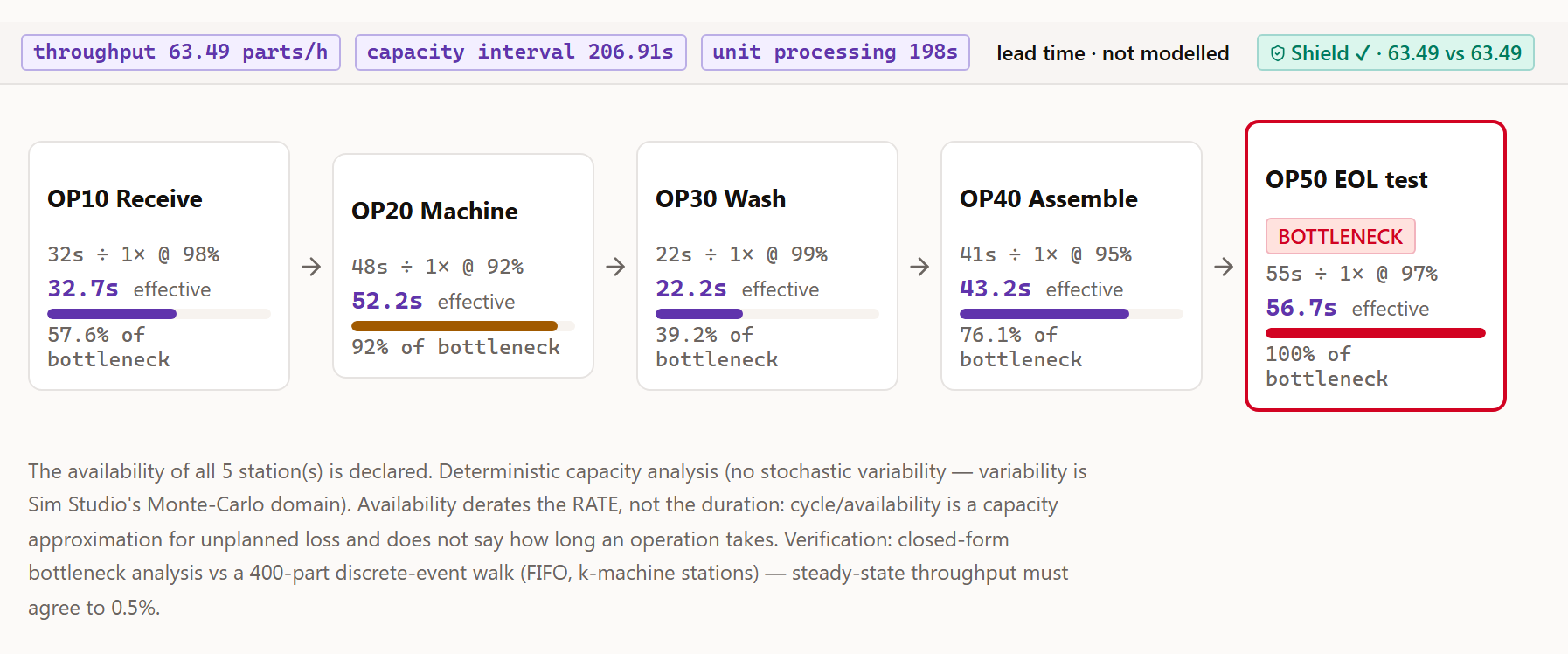
- The end-of-line test is the bottleneck at 56.7 seconds effective; the line delivers 63.49 parts an hour.
- A second, independent calculation agrees with the first before the figure is shown.
- Where an input is not on record, such as demand or shift length, MIYOQA asks for it instead of assuming it.
The line
The end-of-line flow for the electric coolant pump has five stations: receive, machine, wash, assemble and the end-of-line test. Each has a cycle time, a number of machines and a declared availability.
Calculated, then checked
MIYOQA's capacity engine computes the throughput, 63.49 parts an hour, and then checks it a second way: a step-by-step walk of 400 parts through the stations must agree with the closed-form result. Here both give 63.49, so the figure is shown with a check mark rather than a caution.
The screen also says what the figure is not. Availability reduces the rate, not the time an operation takes, and lead time is marked as not modelled rather than guessed.
No assumed inputs
To compare the line with customer demand, the takt time needs the demand and the shift length. When those are not on record, MIYOQA asks for them. It does not fill in a typical shift and present the result as fact.
Why it matters
A capacity figure becomes a commitment in a quotation, a run-at-rate or a staffing plan. MIYOQA shows where the bottleneck is, checks the number before showing it, and is plain about the inputs it does not have.
Demonstration case. The records come from Project M, a synthetic programme that ships with MIYOQA for training and evaluation. No customer data is shown.
More case studies
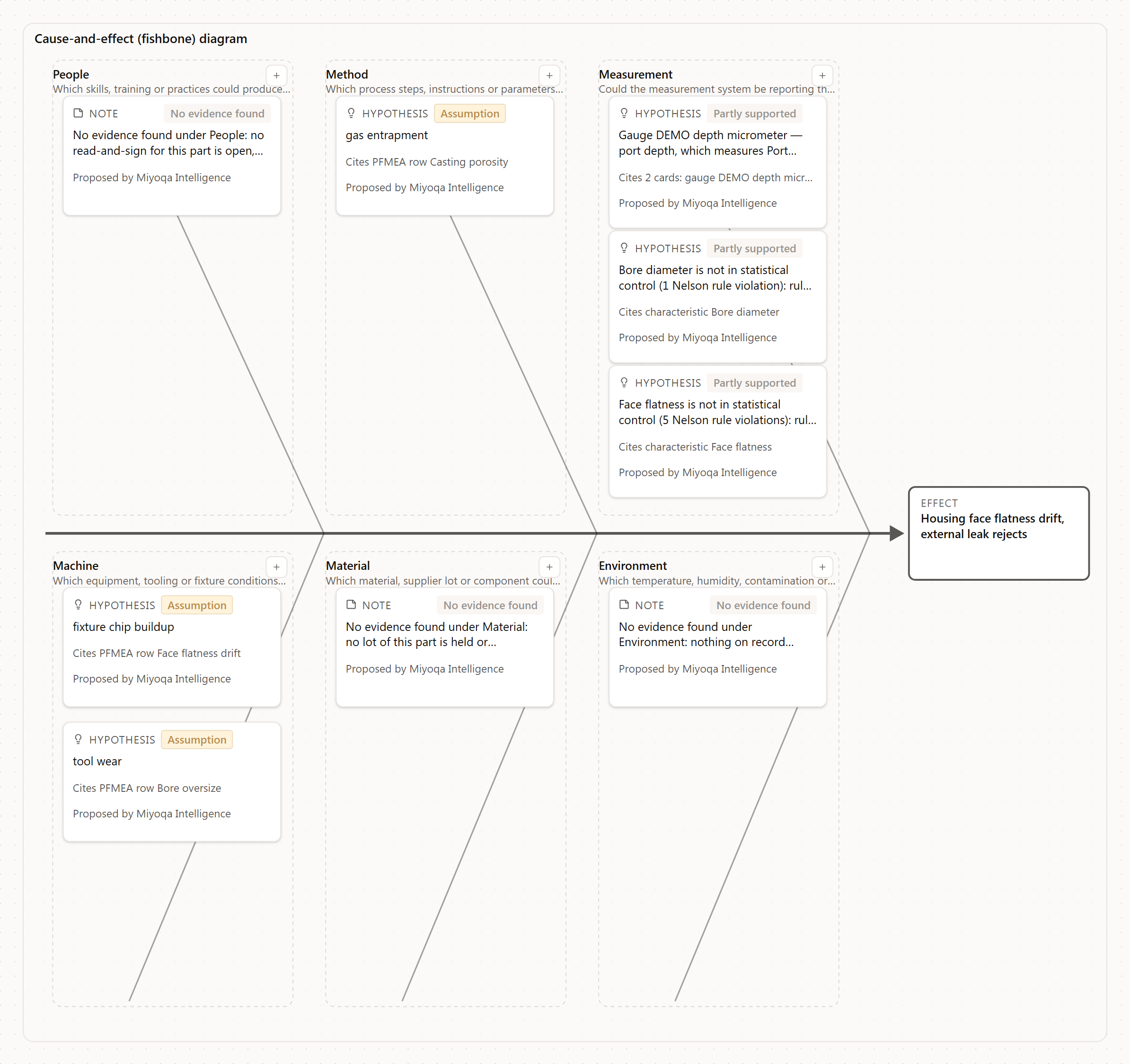
From leak rejects to a root cause, in eleven steps
A pump housing drifted out of flat and leak rejects rose. MIYOQA worked the problem from the records, and left every decision to the engineer.
Read the case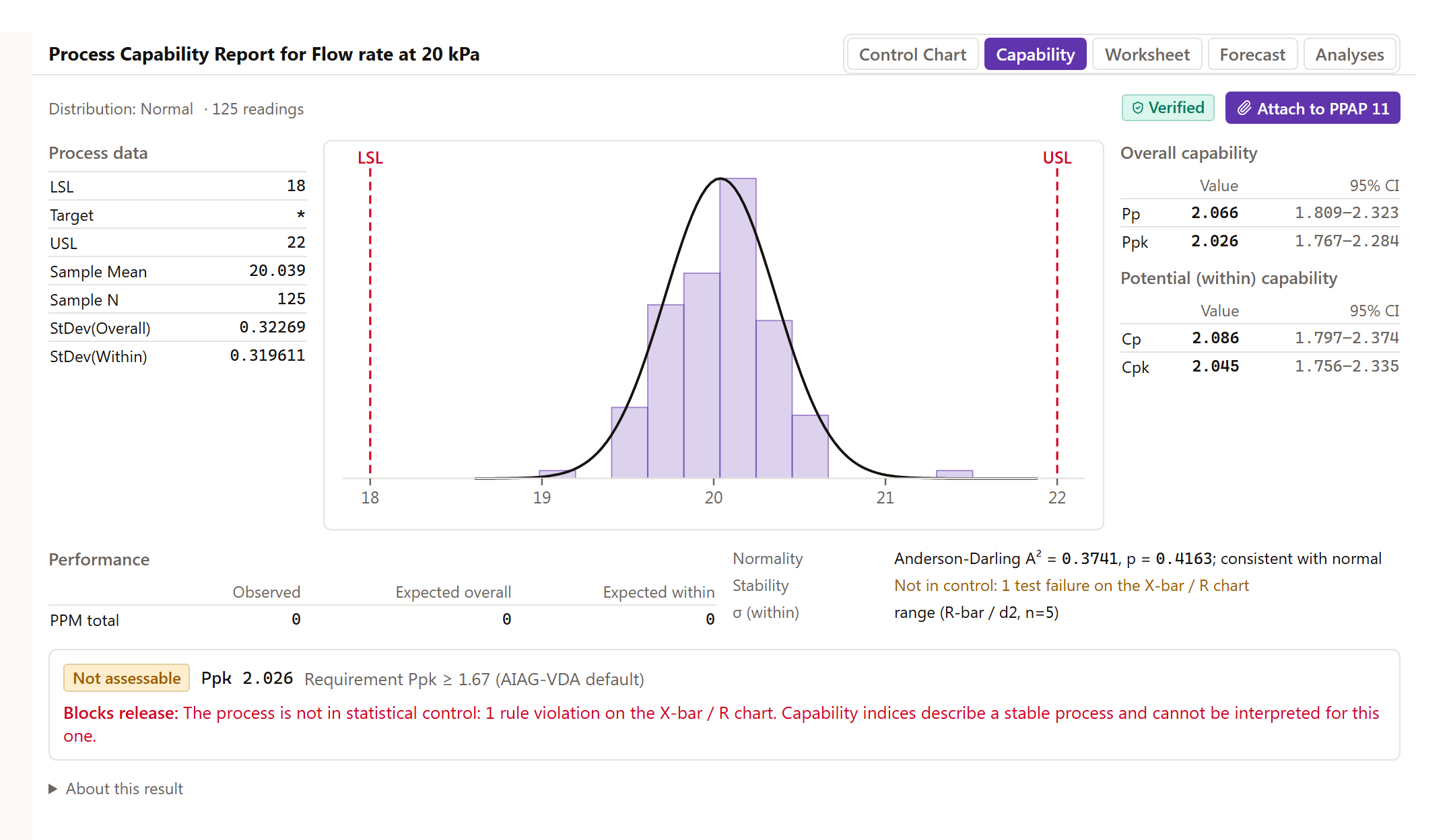
When a Ppk of 2.03 is not good enough
The index was well above the requirement, and MIYOQA still blocked the release. A capability number is only as good as the process behind it.
Read the case