A new station screen, drafted and checked before release
A rule on the nonconformance screen was too weak. Here is how the change was drafted, checked against its scenarios, and held for two approvals.
In brief
- The released screen let a critical finding be recorded without saying whether the customer was told.
- Miyoqa Code drafted the fix and ran the screen's checks: the validator and both acceptance scenarios pass.
- The author cannot accept their own change, and the new version waits for a second approval before release.
The screen, and the gap
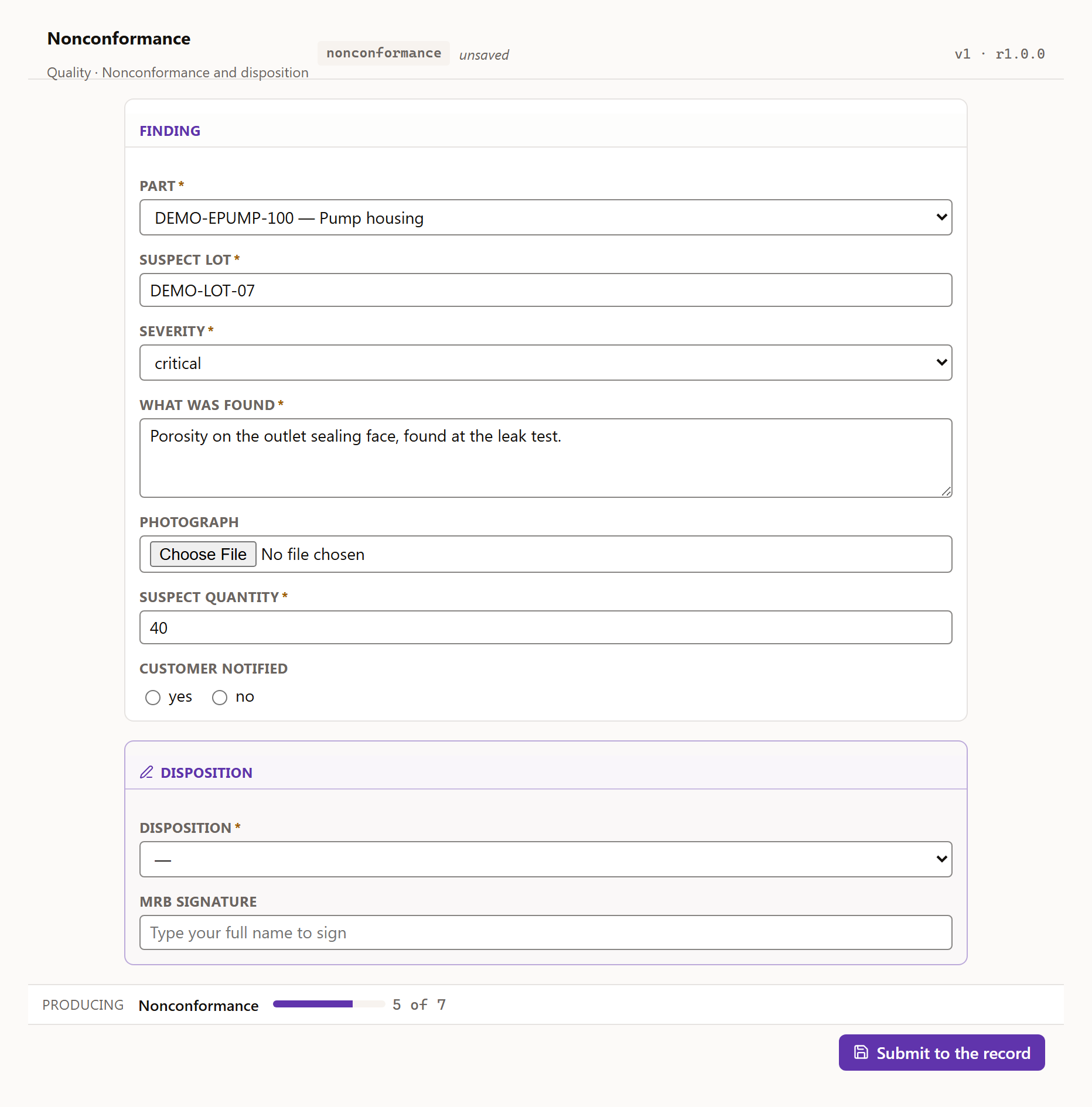
Departments build their own working screens in MIYOQA's Process Designer. This one records a nonconformance at the station: the part, the suspect lot, the severity, what was found and the quantity. On the released version, "Customer notified" was required only for minor findings, so a critical finding could be recorded without it.
Drafted and checked
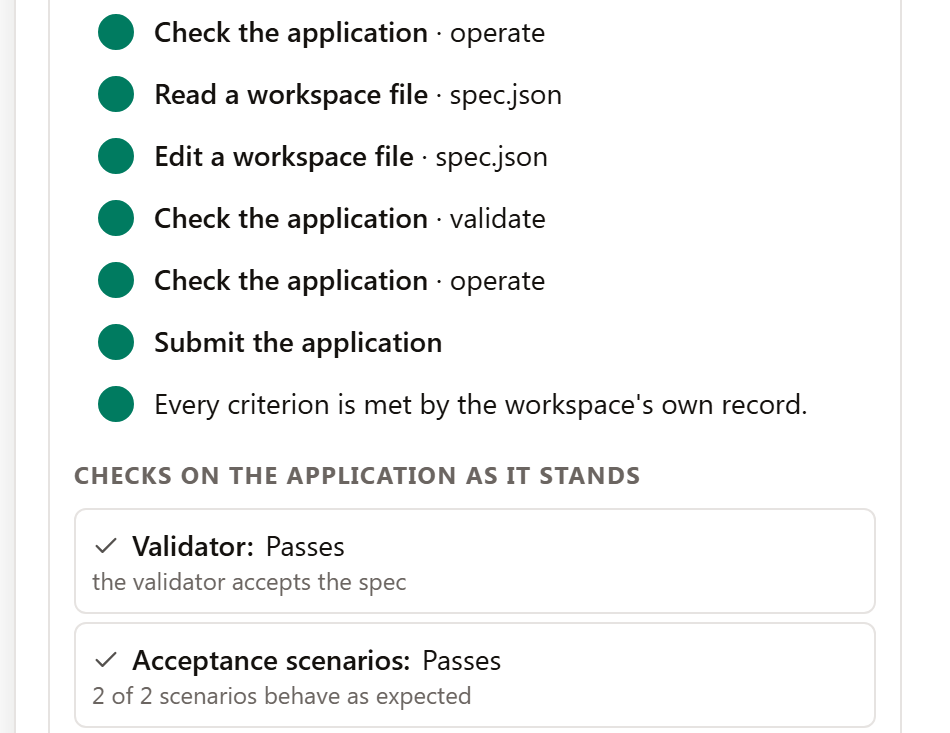
Miyoqa Code, the coding agent inside the Process Designer, drafted the change: the rule now requires "Customer notified" for critical findings. Before submitting, it ran the screen's own checks. The validator accepts the screen, and both acceptance scenarios behave as expected.
Two approvals before release
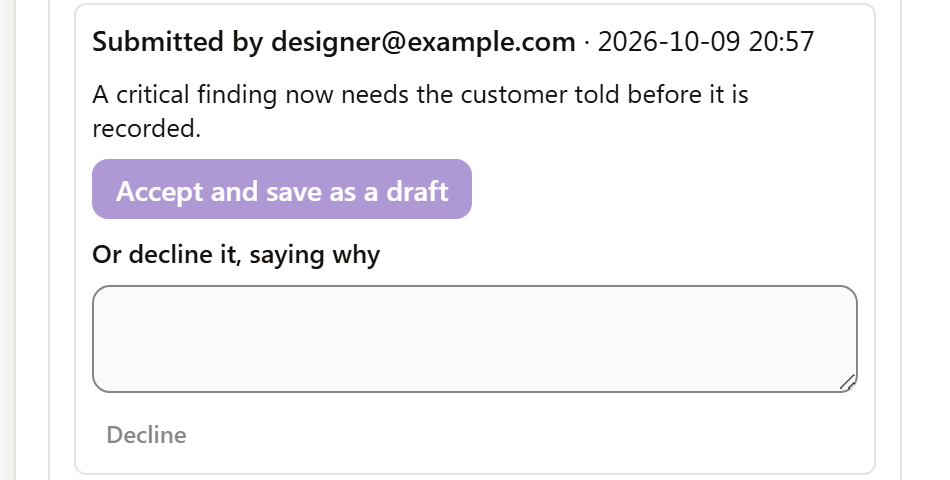
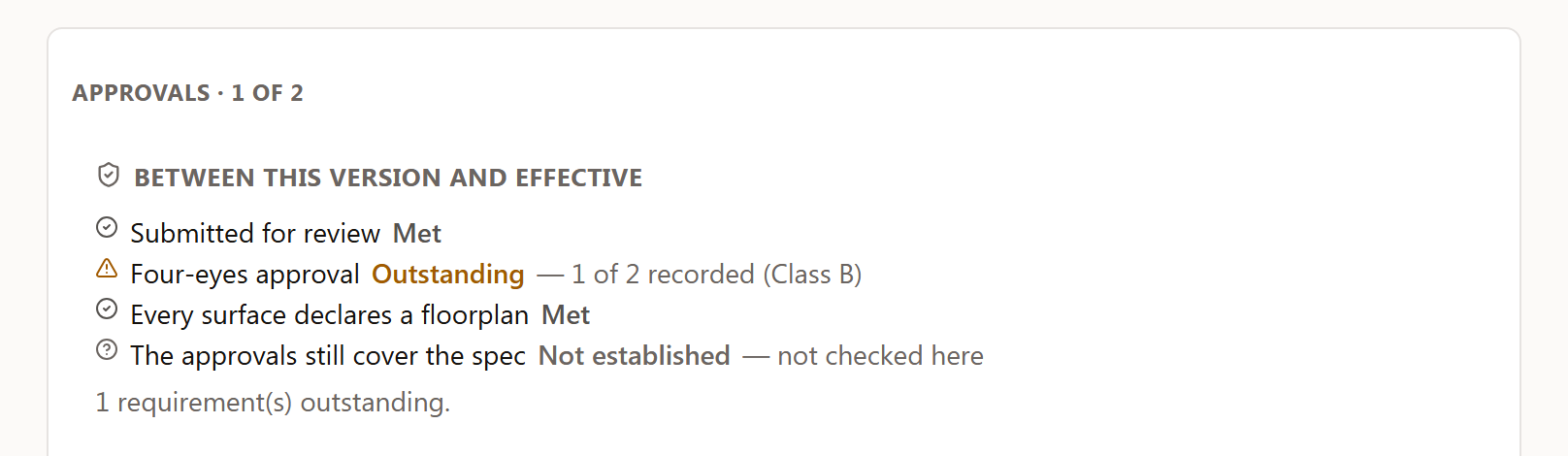
Accepting the draft does not release it. The new version shows what stands between it and becoming effective: submitted for review is met, and the four-eyes approval has one of two signatures. Release stays held until the second approval is recorded.
Why it matters
A station screen is part of the quality system: it decides what an operator must record. MIYOQA lets departments change their screens quickly, and treats every change like any other controlled document: drafted, checked against its scenarios, approved by someone else, and released by name.
This change was drafted in a scripted demonstration run on released code. The addresses shown are placeholders.
Demonstration case. The records come from Project M, a synthetic programme that ships with MIYOQA for training and evaluation. No customer data is shown.
More case studies
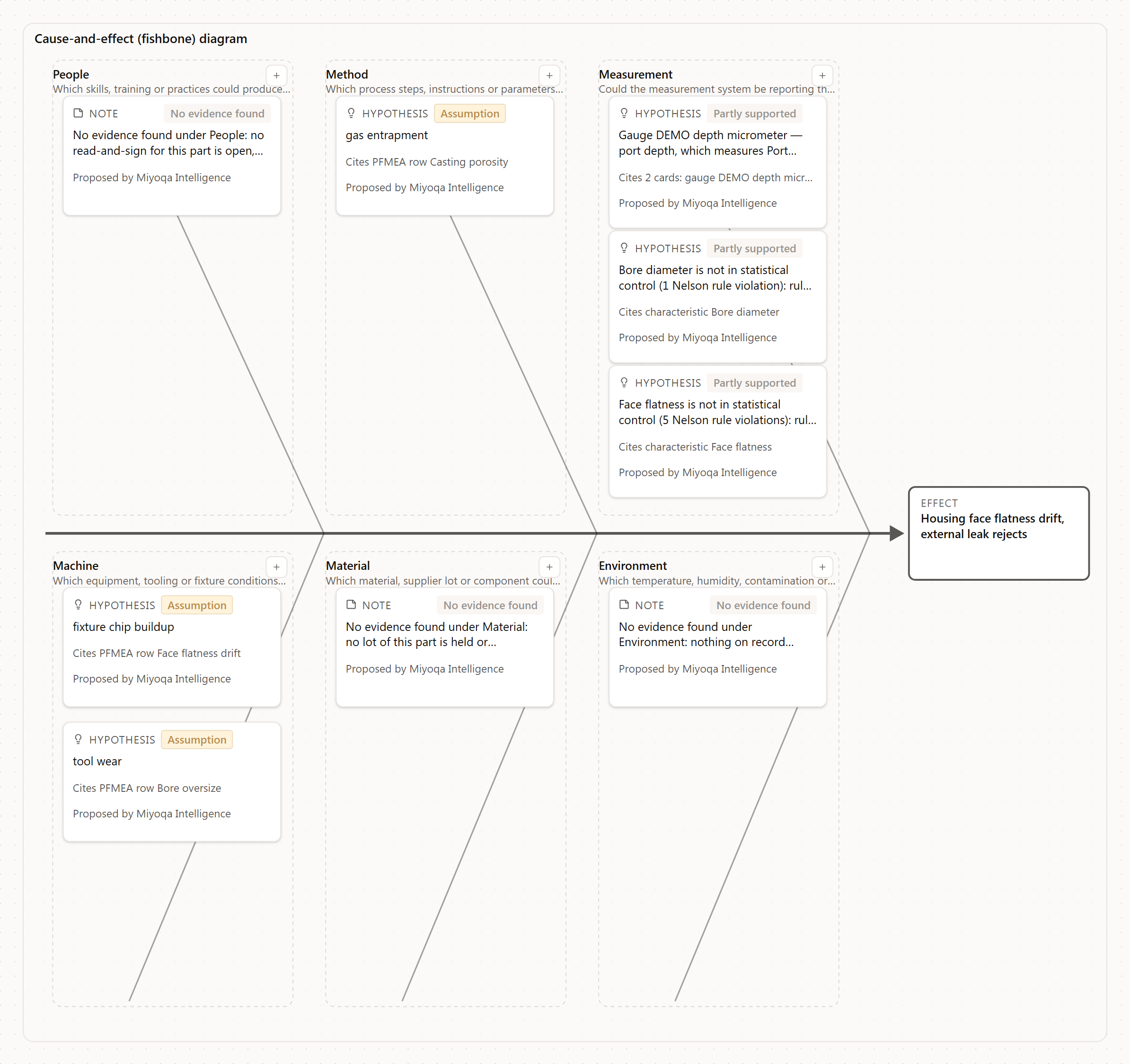
From leak rejects to a root cause, in eleven steps
A pump housing drifted out of flat and leak rejects rose. MIYOQA worked the problem from the records, and left every decision to the engineer.
Read the case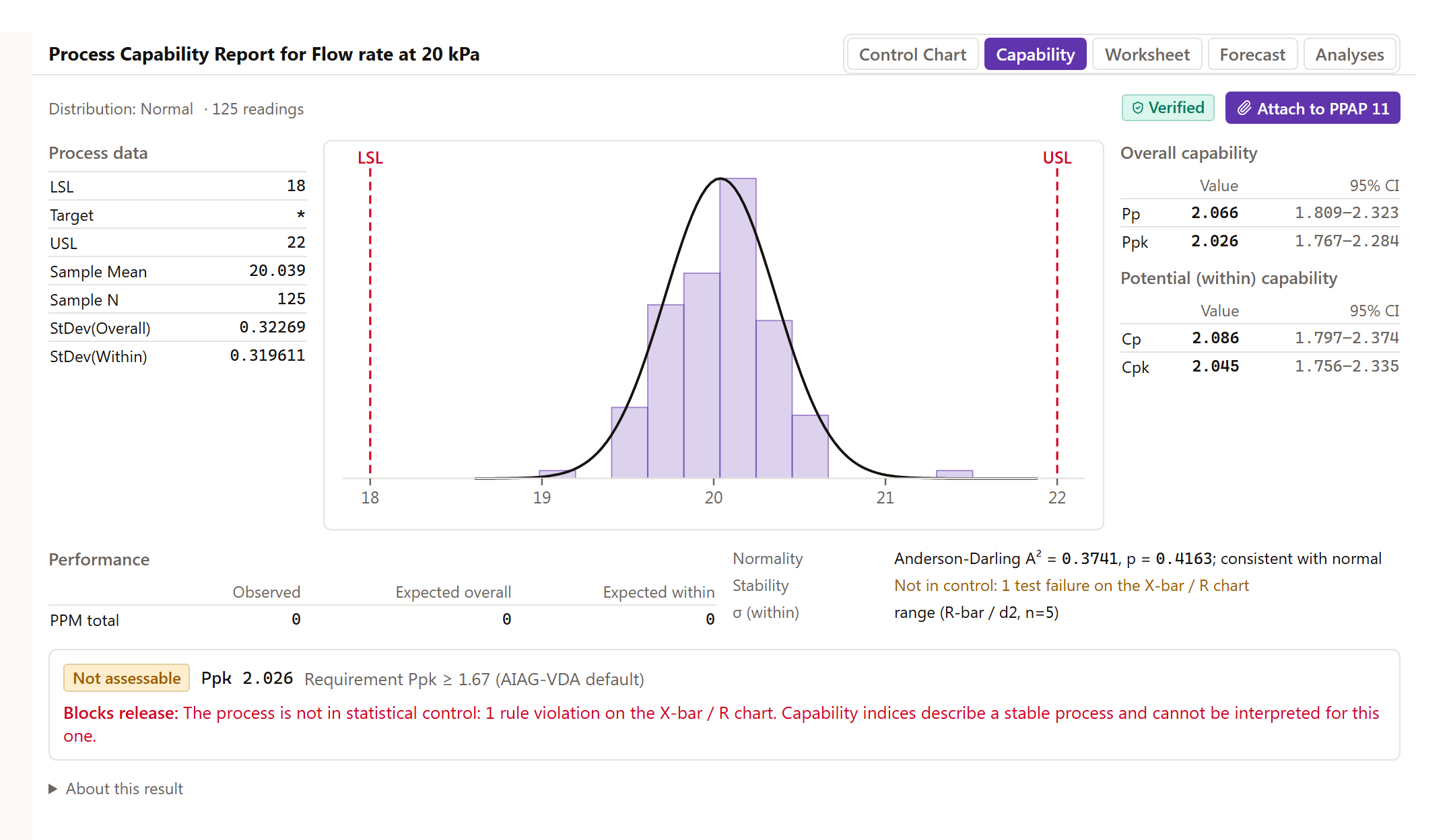
When a Ppk of 2.03 is not good enough
The index was well above the requirement, and MIYOQA still blocked the release. A capability number is only as good as the process behind it.
Read the case